
Roofs and gutters work together to protect your home from moisture damage and leaks. When one of them isn’t doing its job, it can affect the other and cause problems such as rot, soil erosion, foundation and exterior damage, and more. Recognizing the signs of gutter failure and having your gutters maintained regularly can help prevent damage before it gets worse.
A functioning roofing and gutter system is especially important in Washington, where it’s so rainy. Your roof shingles and gutters work together to direct water away from your roof and protect your home from moisture and rot. Without properly maintained, functioning gutters, your roof can be vulnerable to damage. Equity Roofing and Exteriors provides residential roofing solutions that consider how roof design, drainage, and surrounding exterior components work together to protect your home.
How Roofs and Gutters Protect Homes
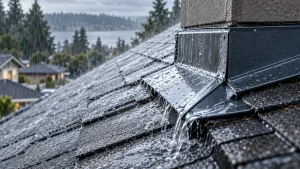
A roof protects your home from weather and pests, while the overall roofing and attic system helps regulate indoor temperatures. One of the roof’s main jobs is to keep water from leaking into your home. The shingles on the roof guide water down the slope so it doesn’t pool. Water flows into the gutter channel, helping prevent moisture from accumulating along the roof edges. The pitch, edges, and valleys of your roof determine how water runs off. Your roof and gutters must be designed to handle the expected rainfall volume.
The gutters help direct water away from the roof edges. Excess moisture can cause the roof deck to rot, causing extensive damage that is costly to repair. It’s better to make sure that your gutters are working right in the first place. Gutters also direct water away from the base of the home, helping protect the foundation or basement. By redirecting water, gutters can also help prevent soil erosion in the yard and driveway, as well as moisture-related damage to surrounding walkways.
Gutters and Roofs Work Together
Although you may think of your roof and gutters as separate things, they actually work together to prevent damage to your home. When one fails, it can affect the performance of the other.
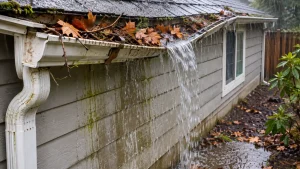
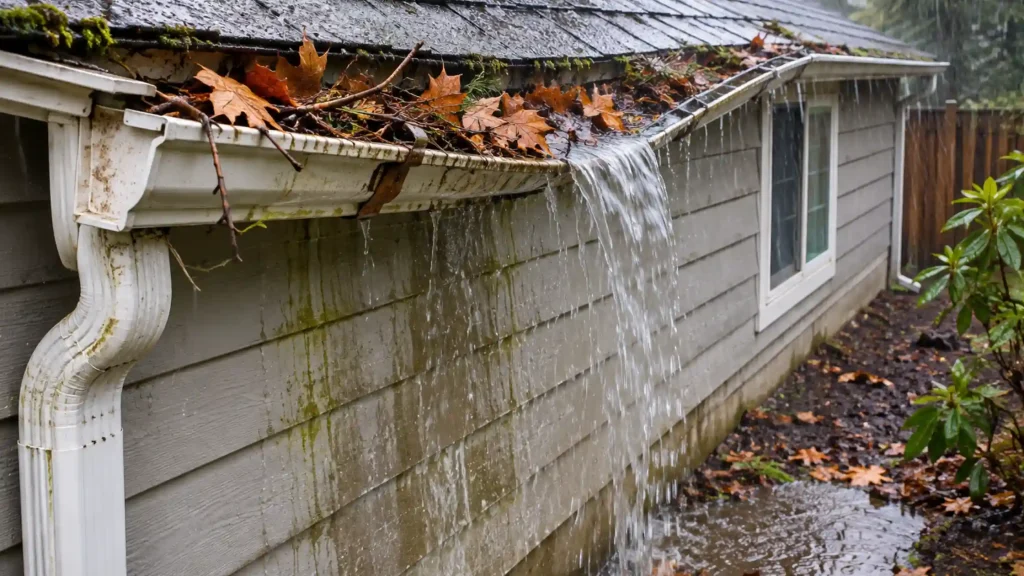
- Even if roof shingles are draining water away effectively, a problem with the gutters could cause the water to stagnate and overflow. For example, the gutters could be clogged with leaves, sticks, and other debris.
- If the gutters are clear, they can still overflow if they cannot handle the volume of water. Your roof’s valleys may concentrate water into one section, overwhelming the gutter in that area.
- Placement of gutters matters too. If they are positioned too far away from the edge of the roof, they may not catch all of the water.
- If a downspout elbow separates, it may discharge water near the house instead of carrying it away from the foundation.
- If the gutter isn’t properly sloped, water can sit and build up debris, leading to overflows and clogs. Standing water can also put strain on the gutters.
- Undersized gutters or too few downspouts may prevent water from draining fast enough during heavy rainfall.
- When roof fascia rots, gutters can pull away from the roof, and water can run behind them. This can worsen the problem and cause moisture damage.
Proper drainage is an important consideration during new roof installation and roof replacement, particularly in Washington’s rainy climate.
Signs of Gutter Failure
Recognizing the signs of gutter problems can help you address them before they get out of hand. Some signs of gutter issues are:
- There are water streaks on the exterior siding of your house.
- Soil is eroding from the base of the house, or water is pooling around the foundation or downspout exits.
- Your gutters are sagging.
- Gutter joints are rusty, separated, or cracking.
- Musty odors, damp corners, or leaks inside your house.
- Staining or mineral buildup on the foundation.
- Water overflowing out of your gutters.
- Your gutters are pulling away from the roof and seem loose.
- The fascia or soffit is stained or rotting.
These warning signs can indicate drainage problems or other sources of moisture intrusion. A professional evaluation can help determine whether the gutters, roofing system, or another exterior component is contributing to the problem.
Gutter Maintenance
Routine gutter maintenance helps them last longer and prevents damage to your house. Have your gutters cleaned out at least twice a year, typically in spring and autumn. Homes surrounded by trees may require more frequent cleaning. A qualified gutter maintenance professional can identify blockages, damaged components, and drainage problems.
You should also check your gutters after storms to make sure they aren’t clogged or damaged. Inspect the fasteners and supports to make sure they aren’t loose; otherwise, the gutter can pull away and not catch water. Make sure that your downspouts discharge water far enough away from the home’s foundation to prevent pooling or saturation. The appropriate distance depends on the property’s grading, soil conditions, and drainage system. Check for cracks, separations, or leaks in your gutters before they get worse.
It is also important to make sure that your roof isn’t damaged, because that could cause gutter issues. Check for signs of poor roof drainage and look for any missing or damaged shingles. Inspect the roof flashing for visible signs of deterioration, warping, or separation.
For safety, perform visual checks from the ground whenever possible, and leave inspections requiring roof access to qualified professionals.
Residential Roofing & Exterior Solutions in Washington
Take Care of Your Gutters and Roof to Keep Your Home Safe
You shouldn’t underestimate the importance of functioning gutters. If your roof shows signs of deterioration or recurring moisture problems, Equity Roofing and Exteriors can help you evaluate your roofing replacement needs.
Our team provides professional roof replacement services with attention to roofing materials, roof edges, drainage, and surrounding exterior components.
Protect your home with a roofing system designed to withstand Washington’s rainy weather.
Licensed, Bonded & Insured
Serving Western Washington
Frequently Asked Questions
Should I get my gutters checked if my roof is leaking?
Many people don’t realize that gutter problems can lead to a leaking roof, so it’s smart to have an inspection done if you suspect a roof leak anyway. You may find out that gutter issues are to blame for the leak.
Do I need to hire a professional to install my gutters?
While it may be tempting to save money and DIY your gutters, it’s often better to have a professional install them. Proper gutter sizing, slope, fastening, and downspout placement help ensure that rainwater drains effectively and away from your home.
Should I choose seamless gutters or traditional ones?
The choice between seamless and traditional gutters depends on your budget and preferences. Seamless gutters have fewer joints along straight sections, reducing potential leak points, while traditional sectional gutters may be easier to replace in individual sections.
What is a seamless gutter?
Seamless gutters are custom-built to match your roofline and formed from continuous lengths of metal. Seamless gutters don’t have joints along straight sections, which helps reduce potential leaks and debris buildup. Connections are still required at corners, outlets, and other transitions.
What are common gutter materials?
Common gutter materials include aluminum, vinyl, galvanized steel, copper, and zinc. The best material depends on your preferences, budget, durability requirements, and local environment.
How often should I get my gutters cleaned?
It’s recommended that you have your gutters cleaned at least twice a year, usually in spring and fall. However, you may need to get them cleaned more often if you have trees in your yard or if there are storms.
How far should water drain away from my house?
Downspouts must discharge water away from the home, preferably onto ground sloping away from the foundation or into an appropriate drainage system. The required distance depends on the property’s grading and drainage conditions. If water is pooling around the base of your house, you may need to extend your downspout or improve drainage.
Can clogged gutters cause problems to the foundation of the home?
Yes, when clogged gutters cause overflow, the ground around the foundation can become saturated with water. Eventually, this can contribute to soil erosion and water intruding into the basement.
What are ice dams on the roof?
Ice dams form when snow melts on a warmer section of the roof and refreezes near colder roof edges. The resulting ice buildup can prevent additional meltwater from draining, allowing water to back up beneath roofing materials and potentially cause leaks and moisture damage.
Can clogged gutters lead to roof leaks?
Yes. Clogged gutters can contribute to roof leaks because sticks, leaves, and other debris block water flow. Overflowing or backed-up water can damage fascia, roof decking, and other vulnerable roofing components, particularly when existing weaknesses are present.
References: University of Minnesota Extension: Dealing with and Preventing Ice Dams and U.S. Department of Energy: Building America Solution Center